

3 Approaches to Reading Scripture and Why They Matter

Podcast available on Apple Podcast, Spotify, or your favourite streaming platform!
How Does Scripture Still Anchor Us When Truth Feels Slippery?
Every generation seems to have its own way of approaching faith in general and Scripture specifically. The pendulum of Christianity never seems to stop swinging.
My parents grew up in a time when the prevailing attitude was simple: “Win my mind, and you can have my heart.” Books like The Case for Christ and the rise of apologetics shaped the spiritual imagination of that era. Faith was something to be proven, defended, and explained with airtight logic. If you could answer the tough questions, people were ready to listen. If you could make it make sense, that’s all that mattered.
Today, though, the currents have shifted. We’re swimming in a culture where truth feels negotiable—my truth, your truth, and the unspoken rule that no one can really claim to have the truth. People aren’t asking, “Is it true?” as much as they’re asking, “Does it work? Is this good? Is this way of life actually beautiful and life-giving?” “Does it address the deeper needs of my heart and my community? Or is it all black and white?”

The truth is, I’m not criticizing that shift. Both are needed. Scripture tells us that it is God’s kindness that leads us to repentance. Not a philosophical argument or an airtight defence of the resurrection. We were created for both mind and soul, logic and longing, clarity and compassion. We know this because God himself tells us to love him with all our heart, soul, mind, and strength.
(Deuteronomy 6:5)
When You Can’t Trust Your Own Story
So here is why I am passionate about biblical literacy, and why my love for Scripture is more than an intellectual pursuit: I cannot always trust my own experience.
Maybe you’ve been there too. I’ve walked through situations that left me confused, discouraged, and emotionally foggy. Sometimes dark seasons of anxiety plague me so deeply that I can’t make sense of my own journey. I’ve looked back on certain seasons of my life and thought, Was God really there? Did he actually come through? Does he really love me? Hindsight isn’t always 20/20. Sometimes it’s murky, distorted, unreliable.
But when I open the Word of God, something different happens. My feelings don’t get to drive my faith then. Even while I’m all over the place emotionally, I encounter a God who has been the same since the dawn of time: gracious, merciful, generous, forgiving, loving, and just. I watch his character unfold page after page, across centuries, cultures, and covenants. I see divine faithfulness that never wavers. I see consistency and care.
And I realize: If he has been faithful since forever, he will not break his track record on me.
Not on this circumstance.
Not on this season.
Not on this heartbreak or this uncertainty.

Your own history with God might feel tangled or unclear but the witness of Scripture stands firm. The words on those pages speak courage, clarity, and conviction into the chaos of our own lives.
Faith was never meant to lean completely to one side. My own experience tells me that my faith grows stronger through the intellect. Loving God with all my mind comes so easily to me. I love to study the Scriptures and find deep comfort in understanding more and more about the story of the Bible. And yet, I am an emotional creature that needs to connect it all to my own lived experience or else it remains an intellectual pursuit that speaks nothing to my heart.
Both are needed.
But How Can We Believe What We Don’t Know?
Of course, this leads to a necessary question:
How can we trust what we’ve never learned? How can we believe what we’ve never been taught?
Paul asks the same thing in Romans 10:
“How, then, can they call on the one they have not believed in? And how can they believe in the one of whom they have not heard? And how can they hear without someone preaching to them? And how can anyone preach unless they are sent?”
(Romans 10:14–15)
This charge is not just to pastors, teachers, parents, or faith leaders in general. We all have a responsibility to know the God of the Bible and then to introduce people to him, not just the idea of him. That requires understanding beyond mere sentiment or feeling.
We are reminded in Scripture that faithful followers don’t just overcome the enemy by the blood of the lamb, but by the word of their testimony as well.
(Revelation 12:11)
That shared experience of telling others the story of God changes something in us. It liberates us. It empowers us.
Jesus reinforces this in John 8:
“If you hold to my teaching, you are really my disciples. Then you will know the truth, and the truth will set you free.”
(John 8:31–32)
Don’t we just love the second half of that verse? It sounds empowering, almost poetic: the truth will set you free. But we cannot ignore what’s written in black and white. Jesus frames it as a conditional promise: IF you hold to my teaching, THEN you will know the truth.
The freedom comes after the faithfulness.
The clarity comes after the commitment.
The transformation comes after the trust.
This echoes the Great Commission: “Teach them to obey.” Not just inspire them. Not just help them feel loved. But teach them! Teach them to understand, to follow, to practice, to live.
Why We Need More Than Feelings
We live in a moment deeply shaped by emotion. And I won’t negate the fact that emotions are God’s good gifts to us. Feeling loved by God is beautiful and necessary. But Jesus calls us to not only feel his love, but to know it. To understand it. To be anchored by it.
When our feelings shift (and they will), knowledge steadies us. When experiences confuse us, Scripture clarifies. When memories fail, truth remains.
Three Ways We Read Scripture—and Why We Need All of Them
Because I have experienced the flourishing effects of knowing the God of the Bible, I am compelled to bring others along on this journey. I have found it to be immensely valuable to understand the different approaches to Scripture reading and recognize where we tend to gravitate toward so that we can then balance them out as we read.
1. The Biblical Scholar
This reader is interested in understanding what the text actually says—its historical and cultural context, its place in the grand narrative of Scripture, the meaning behind the original words. This is where we learn accuracy and clarity.
Scripture has been foundational to our worldview for generations, even with the rise of secularism, and yet many of us don’t know where our views originate from. We use phrase like, “he went the extra mile”, or “she was a good samaritan that day”, or “they’re salt-of-the-earth kind of people”, and we don’t even know what they mean in context! On a deeper level, we have unspoken understanding about how to live and how to interact with others without even knowing that much of these beliefs stem from Scripture itself and the character of God communicated in the stories.
Do you want to flourish? Do you want true freedom? The Bible is clear: know the truth, and the truth will set you free.
(John 8:31-32)
2. The Systematic Theologian
This reader studies how Scripture’s stories and teachings connect across the whole Bible and builds a framework for understanding doctrines like original sin, the resurrection, salvation by grace, and the character of God.
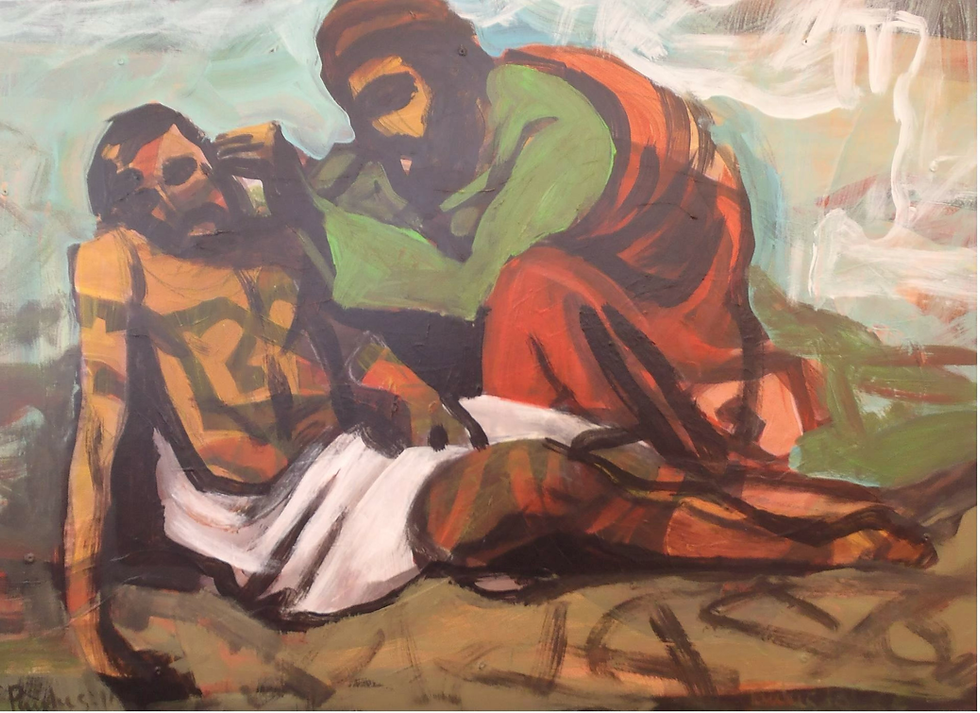
Here’s an example, it’s important to know the story of the Good Samaritan. It’s also important to understand the theological implications of the feel-good story. The Good Samaritan doesn’t just give us an example to emulate, but framework around the doctrine of the imago dei—a theological concept that humans are created in the image of God. Being image-bearers means that humans possess a unique spiritual and rational nature that reflects God’s divine qualities. This gives every person inherent dignity and worth. Even those who are not like us, as the Good Samaritan story communicates. It’s a doctrine harkening all the way back to Genesis 1:27 that informs our views on human value, purpose, and social responsibility.
Reading the Bible through a theological lens means that we are not just exploring the contents of the Bible, but the meanings in the Bible.
3. The Spiritual Director or Pastor
This reader approaches the Bible asking, “How should this shape me? How does this transform the way I live?” It’s practical, intimate, and deeply personal. So that once we know the stories—like the Good Samaritan, and then come to know what they mean—like within the doctrine of the imago dei which gives inherent value to each person because they are created in the image of God, then we want to know what that looks like for our day-to-day, boots-on-the-ground kind of life.
Simply put, we need to get to a place where we can ask: “based on what I’ve learnt and how it shapes my beliefs, how does it affect the way I now live?”
And so we actually need all three.
We need to know what the Bible says,
understand what it means,
and discern what we should do with it.
When these three strands are woven together, our faith becomes sturdy, holistic, and deeply rooted.
Not Sure Where to Start?
Here’s a three-track approach: try reading the same passage through all three lenses. As you read, ask yourself:
1. “What does it say?”
2. “What does this teach me about what Christians believe?”
3. “How do I live this today?”
Watch how the text opens up when you give it room to speak from different angles.
What’s in the Ears
This is the part where I share a song or podcast I’m currently into. This song is my favourite rendition of Joy to the World and it’s sung by JJ Heller. Let me know if you check it out!
If this stirred something in you, share this post with a friend or drop a comment below. I’d love to hear what small step you’re taking towards the flourishing life today! And don’t forget to subscribe so you don’t miss a thing.
Podcast available on Apple Podcast, Spotify, or your favourite streaming platform!




Comments